






Few pieces of jewellery carry the kind of artistic weight that the Algerian Love Knot does. What looks at first glance like a simple twist of metal is actually the result of careful design thinking and hours of skilled work at the bench. Behind every finished piece sits a story of artistic intent and the kind of know-how that takes decades to build.
This article explores the artistry that brings this iconic motif to life. We will look at the design philosophy that shapes each piece, the creative journey from first sketch to finished work, the techniques used at the workbench and the finishing details that separate fine craft from mass production.
The Design Philosophy Behind the Knot
The Algerian Love Knot is a study in contrast. It is delicate yet structured, ornamental yet meaningful. Translating that balance into jewellery takes more than technical ability. It calls for a designer who understands proportion and knows how a curve catches the light.
Every interpretation of the motif starts with a clear artistic point of view. The interlocking loops need to feel intentional rather than busy. The negative space between the curves matters as much as the metal itself, because it gives the knot its sense of movement and lightness when worn.
The artistry of the Algerian Love Knot lies in how a designer handles this tension between fullness and openness. Some interpretations lean into elegance with thin, wire-like loops. Others go bolder, with rounded forms that feel more sculptural. Both approaches succeed when the underlying philosophy is honoured.
From Sketch to Studio
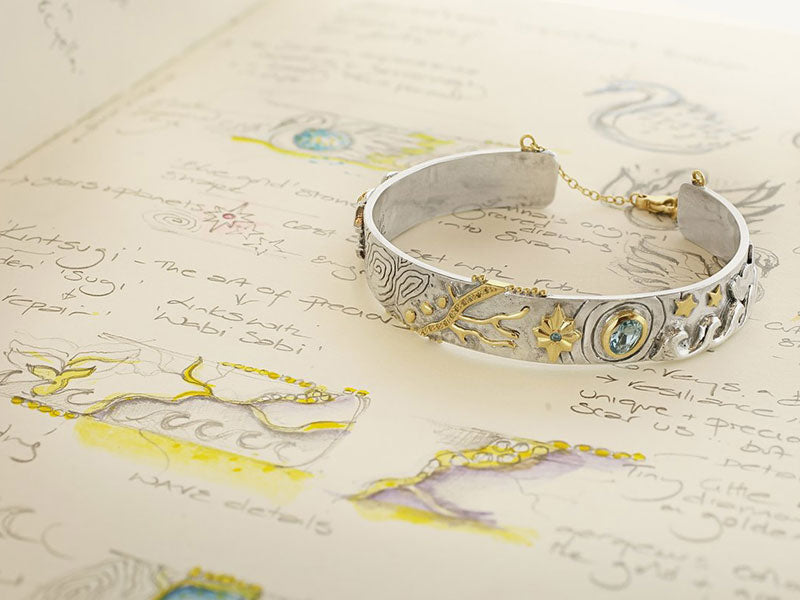
Every finished piece begins life on paper. Initial sketches explore proportions, loop counts and how the knot might sit as a pendant, an earring or a ring. These drawings often go through several rounds before the design feels right, with small adjustments to curve depth making a real difference to the final look.
Once a sketch is approved, the next step usually involves a wax or metal prototype. This stage is where the design moves from a flat image into three dimensions, and where small surprises tend to appear. A curve that looked graceful on paper might need rebalancing once it sits in the hand.
This back and forth between design and physical prototype sits at the heart of the craft behind this iconic knot. It is not a quick process and there are no shortcuts. The studio time invested here is what separates a piece that imitates the form from one that genuinely captures its spirit.
Mastering the Metalwork
Once the design is finalised, the real bench work begins. Creating the knot in metal involves shaping each loop by hand, using a combination of forming, soldering and gentle hammering to build up the structure. The metal must be coaxed rather than forced, with the smith working in small steps to keep the lines clean.
Soldering is one of the most demanding parts of the process. Each join needs to be strong enough to last a lifetime yet invisible to the eye once polished. This calls for precise heat control, careful flux work and a steady hand. Done well, the seams disappear and the knot looks as if it was formed from a single piece of metal.
The artistic skill involved in making the love knot really shows in how the curves flow into one another. A skilled silversmith works the metal until each loop feels continuous, smoothing transitions and refining the form until the eye travels naturally around the piece.
The Finishing Touches That Define Quality
Once the structure is complete, the finishing stage begins. Filing softens any sharp edges left from soldering, and progressively finer abrasives smooth the surface until it is ready for polishing. This step alone can take hours, with the smith working over every curve to make sure nothing is missed.
Polishing brings the piece to life. The high shine on a well finished knot is what makes the loops appear to ripple as the wearer moves. Different parts of the design might be polished to different finishes, with some makers contrasting a bright outer surface against a softer matte texture inside the loops.
The final stage is inspection. Every join is checked, every curve is examined under good light and the piece is measured against the original specification. Only when the work meets the maker's own standard does it move on to packaging. This level of care is what gives a handmade piece its quiet authority.
In Conclusion
The Algerian Love Knot earns its reputation through the artistry behind every stage of its making. From the design philosophy that shapes its proportions to the careful sketching, prototyping, metalwork and finishing, each step calls for genuine skill and patience. The result is a piece that feels considered, balanced and built to last.
If you would like to see this level of craftsmanship for yourself, you are warmly invited to browse our online collection or visit our London studio in person. Each piece in our range is created by hand using traditional techniques and the finest materials, and we love helping customers from around the world find a piece that feels truly theirs. Reach out to our team for guidance, or come and experience the work first hand.